148+ What Does Rag Mean On A Floor Plan
When diving into the world of architectural design and floor plans, you might come across various abbreviations and symbols that can leave you scratching your head. One such term is "RAG," which stands for "Room Area Guide." Understanding what RAG means on a floor plan is crucial for anyone looking to maximize their space, whether you're a homeowner, an architect, or a real estate professional. In this blog post, we'll explore the significance of RAG in floor planning, how it can impact your design choices, and why it's essential to grasp this concept for effective space management. Join us as we unpack over 148 insights into the meaning and application of RAG in floor plans, ensuring you're well-equipped to navigate your next design project with confidence.
The Most Insightful Stories About Rag Architecture
When exploring the term "rag" in the context of floor plans, it's essential to delve into the fascinating stories behind rag architecture. This unique style, often characterized by its eclectic blend of materials and textures, offers a glimpse into the creativity and resourcefulness of architects and builders throughout history. Rag architecture typically incorporates repurposed elements, showcasing a commitment to sustainability and artistic expression. From the vibrant streets of urban environments to the serene landscapes of rural settings, these structures tell stories of cultural heritage and innovation. By examining the most insightful tales of rag architecture, we can appreciate how these designs not only serve functional purposes but also reflect the rich narratives of the communities they inhabit.

medium.com
8 Retrieval Augmented Generation (rag) Architectures You Should Know In
When exploring the concept of Retrieval-Augmented Generation (RAG) architectures, it's crucial to understand the eight key models that stand out in the field. These architectures leverage the synergy between retrieval and generation to enhance the quality and relevance of generated content. Notable examples include the Dense Retrieval model, which focuses on semantic similarity to fetch relevant documents, and the Hybrid Retrieval model, combining both dense and sparse retrieval methods for optimal results. The Multi-Document RAG architecture excels in synthesizing information from various sources, while the Knowledge-Enhanced RAG incorporates external knowledge bases to enrich the generation process. Additionally, the Contextual RAG adapts its responses based on user context, and the Iterative RAG refines outputs through successive retrieval and generation cycles. The Self-Supervised RAG employs unsupervised learning techniques to improve performance, while the Domain-Specific RAG tailors its approach to specialized fields, ensuring that the generated content meets specific user needs. Understanding these architectures can significantly enhance your grasp of how RAG technologies are shaping the future of content generation.

humanloop.com
What Does Rag Mean?
In the context of a floor plan, the term "RAG" typically refers to a color-coding system used to indicate the status or condition of various areas or elements within a space. The acronym stands for Red, Amber, and Green, each color representing a different level of urgency or importance. Red usually signifies areas that require immediate attention or are in critical condition, Amber indicates caution or areas that may need monitoring, while Green represents spaces that are in good condition and do not require immediate action. Understanding the RAG system can help stakeholders quickly assess the overall health of a property and prioritize maintenance or renovation efforts effectively.

Rag Status Reporting In Project Management: Definition, Example
In project management, RAG status reporting is a visual tool used to indicate the health and progress of a project through a simple color-coded system: Red, Amber (or Yellow), and Green. Each color represents a different status: Red signifies significant issues that require immediate attention, Amber indicates potential risks or minor problems that need monitoring, and Green means everything is on track and progressing as planned. For example, in a construction project, if the timeline is delayed due to unforeseen circumstances, the project manager might report the status as Red. Conversely, if the project is slightly behind schedule but manageable, it would be marked Amber. This straightforward approach helps stakeholders quickly assess project status and make informed decisions, ultimately contributing to more effective project management.

pmstudycircle.com
Attack Vectors On Rag Applications
When discussing the term "RAG" in the context of floor plans, it's essential to consider the potential attack vectors associated with rag applications. RAG, which stands for Red, Amber, and Green, is a color-coding system used to indicate the status or performance of various elements within a project or environment. However, like any software application, rag applications can be susceptible to various security threats. Attack vectors may include SQL injection, where malicious users exploit vulnerabilities in the database interactions, or cross-site scripting (XSS), allowing attackers to inject harmful scripts into web pages viewed by others. Additionally, improper access controls can lead to unauthorized data exposure, making it crucial for developers and project managers to implement robust security measures. Understanding these attack vectors is vital for safeguarding sensitive data and ensuring the integrity of the information represented in RAG applications on floor plans.

heycloud.beehiiv.com
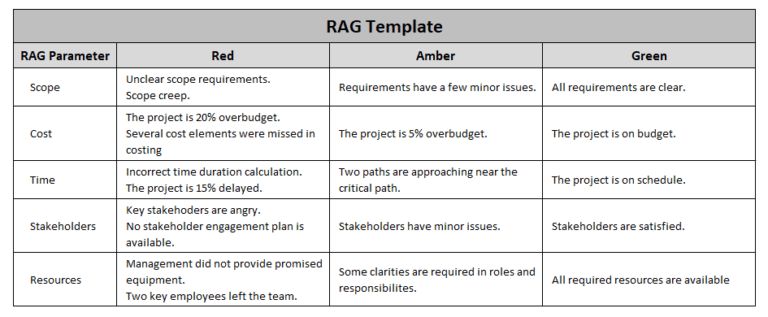
Rag Status Reporting In Project Management: Definition, Example
In project management, RAG status reporting is a visual tool used to indicate the health and progress of a project through a simple color-coded system: Red, Amber (or Yellow), and Green. Each color represents a different status: Red signifies significant issues that require immediate attention, Amber indicates potential risks or minor problems that need monitoring, and Green means everything is on track and progressing as planned. For example, in a construction project, if the timeline is delayed due to unforeseen circumstances, the project manager might report the status as Red. Conversely, if the project is slightly behind schedule but manageable, it would be marked Amber. This straightforward approach helps stakeholders quickly assess project status and make informed decisions, ultimately contributing to more effective project management.
pmstudycircle.com
Rag Status
In the context of floor plans, "RAG" typically refers to a color-coded system used to indicate the status or condition of various areas within a space. This acronym stands for Red, Amber, and Green, where each color signifies a different level of urgency or attention required. Red indicates critical issues that need immediate action, Amber signifies areas that may require monitoring or maintenance, and Green represents spaces that are functioning well and do not need intervention. Understanding RAG status on a floor plan can greatly enhance project management and decision-making processes, allowing stakeholders to quickly identify priorities and allocate resources effectively. Whether you're involved in facility management, construction, or real estate, grasping the significance of RAG can lead to more efficient operations and improved outcomes.

business-docs.co.uk
Retrieval Augmented Generation (rag) Explained [+ Examples]
Retrieval Augmented Generation (RAG) is an innovative approach in natural language processing that combines the strengths of retrieval-based and generative models to produce more accurate and contextually relevant responses. Essentially, RAG retrieves information from a large dataset or knowledge base and uses that information to enhance the generation of text, making it particularly useful for tasks that require up-to-date or specific knowledge. For example, in a customer service chatbot, RAG can quickly pull relevant FAQs from a database and generate a tailored response that addresses a user's unique query. Similarly, in educational settings, RAG can access vast repositories of information to provide students with detailed explanations or examples based on their questions. This hybrid model not only improves the quality of the generated content but also ensures it is grounded in real-world data, making it a powerful tool for various applications.
![Retrieval augmented generation (rag) explained [+ examples]](https://i0.wp.com/assets-global.website-files.com/614c82ed388d53640613982e/654a0fdd4143dab354b251f9_how-does-rag-work_.webp)
Floor Plan Symbols, Abbreviations, And Meanings
When diving into the intricacies of floor plans, understanding the symbols, abbreviations, and their meanings is essential for both homeowners and professionals in the industry. Floor plan symbols serve as a universal language, conveying critical information about the layout and features of a space. For instance, abbreviations like "RAG" often refer to specific elements, such as a "Rug Area Guide," which helps in visualizing furniture placement and spatial relationships. Familiarizing yourself with these symbols not only enhances your ability to interpret architectural drawings but also aids in effective communication with architects and builders. Whether you're planning a renovation or simply exploring design options, mastering these visual cues can significantly streamline the process and ensure your vision comes to life.

Rag Strategies
When exploring the intricacies of floor plans, understanding the term "RAG" is essential for interpreting design strategies effectively. RAG, which stands for Red, Amber, and Green, is a color-coded system used to assess and communicate the status of various elements within a project, including space utilization and functionality. In the context of floor plans, RAG strategies help designers and stakeholders quickly identify areas that require attention or improvement. For instance, a "Red" zone might indicate a critical issue, such as inadequate space for essential activities, while "Green" signifies optimal conditions. By incorporating RAG strategies into floor planning, teams can enhance collaboration, streamline decision-making, and ultimately create environments that better serve their intended purpose.

blog.premai.io